Global market expansion accelerates as Chinese exports surge 33.4% in Jan-Feb 2026, while electrification and autonomous technologies reshape the industry landscape.
The construction machinery industry is off to a remarkable start in 2026, driven by robust export performance, accelerating technological innovation, and sustained infrastructure investment worldwide. From the record-breaking CONEXPO-CON/AGG show floor in Las Vegas to shipping ports bustling with heavy equipment bound for emerging markets, the industry is experiencing a powerful convergence of growth drivers across both domestic and international fronts.
The global construction equipment market has entered a phase of steady expansion. According to market research reports, the global construction machinery market was valued at approximately $232.54 billion in 2025 and is projected to reach $245.47 billion in 2026, reflecting a compound annual growth rate (CAGR) of 5.83%. Other industry reports estimate even stronger momentum, with the broader construction machinery market expected to grow from $362.27 billion in 2025 to $388.22 billion in 2026 at a CAGR of 7.2%.
The recovery is underpinned by improving global manufacturing conditions. The JPMorgan Global Manufacturing PMI climbed to 51.9% in February 2026, up one percentage point from January, marking the seventh consecutive month above the 50-point threshold that separates expansion from contraction. As a bellwether sector for global economic activity, construction machinery typically benefits early in new cycles of manufacturing expansion.
Bank of America analysts note that construction equipment is positioned to be among the first subsectors to recover, supported by fleet rebuilding needs and an improving project pipeline, with agricultural equipment expected to lag behind.
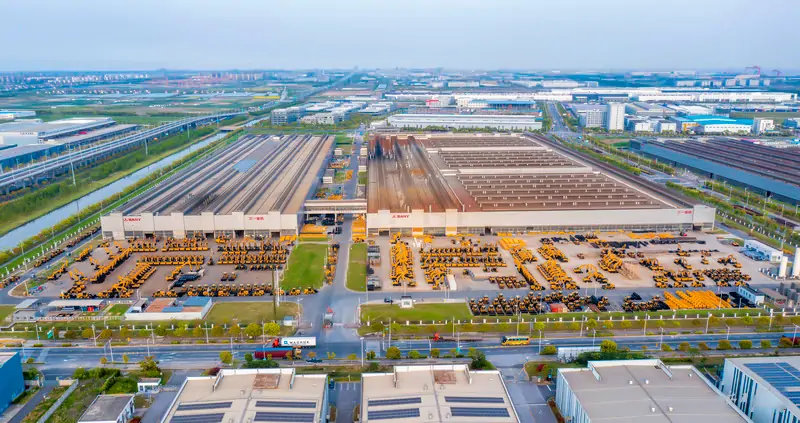
Chinese construction machinery exports have emerged as a major driver of global supply chains in 2026. Data released by the China Construction Machinery Association (CCMA) shows that in the first two months of 2026, China’s construction machinery exports reached $10.686 billion, a year-on-year surge of 33.4%. Total trade in construction machinery products during January-February 2026 reached $11.072 billion, up 31.4% year-on-year. Remarkably, even with the Chinese New Year holiday falling in February—a period when manufacturing and logistics typically slow down—export value exceeded $5.1 billion, surpassing the monthly average of $5.016 billion recorded throughout 2025.
The growth has been broad-based across regions. Exports to Africa surged 77%, followed by Oceania at 50.6% and Europe at 28.1%. A total of $4.638 billion—representing 43.4% of all exports—went to Belt and Road Initiative partner countries, an increase of 24.6% year-on-year. Analysts point to a notable shift in export structure, with growth momentum transitioning from traditional markets to fast-growing emerging markets in Africa and Latin America, helping industry players diversify their market presence and reduce reliance on any single region.
In terms of product categories, excavators remain the largest export segment by value, reaching 12.98 billion yuan in January-February 2026, up 29.7% year-on-year. From a unit sales perspective, China exported 10,039 excavators to the United States, 4,762 units to Indonesia, 2,702 units to Belgium, 1,372 units to Brazil, and 1,141 units to Australia during the two-month period.
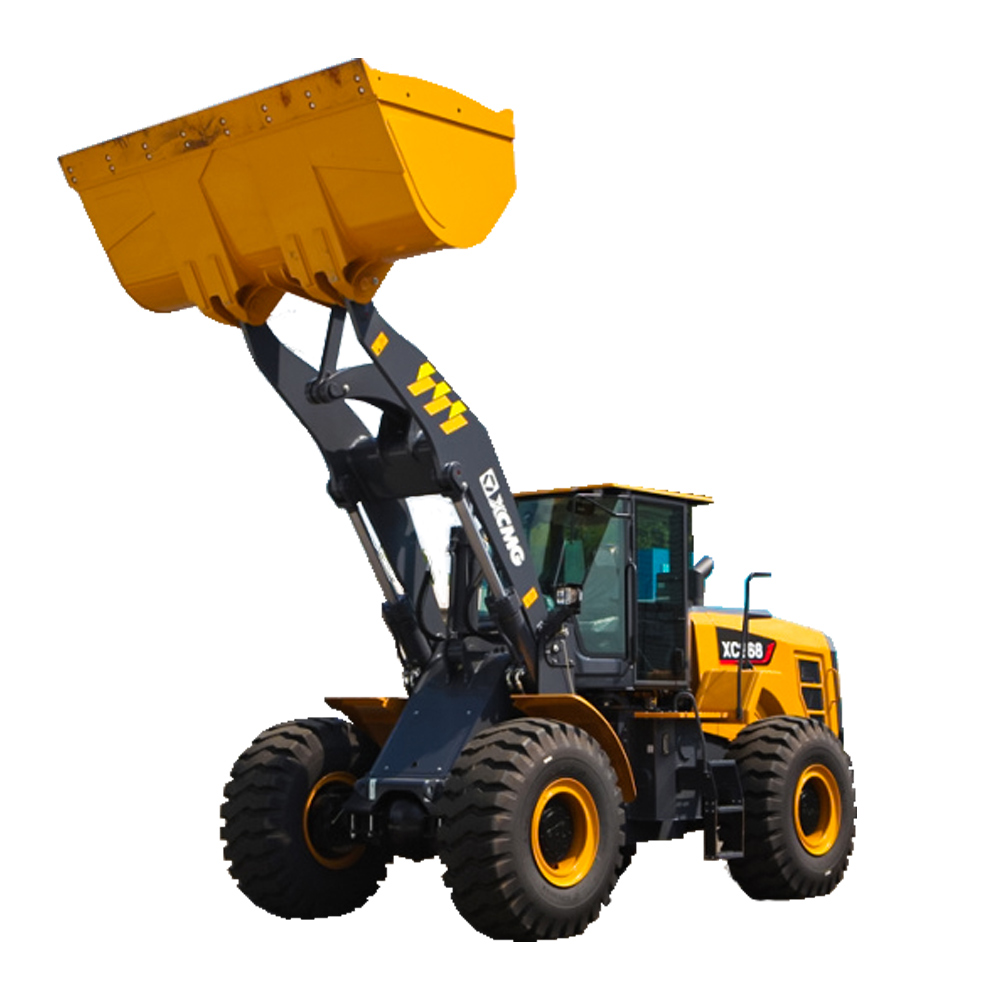
The growth is not limited to excavators. Loader exports reached 12,143 units in January-February 2026, a year-on-year increase of 43.9%. Crawler crane exports totaled 794 units, up 31.46%, with the United Arab Emirates emerging as the largest destination market. Forklift sales surged 51.4% to 141,743 units, and aerial work platform sales rose 29.3% to 14,466 units, with overseas sales consistently outpacing domestic performance.
Chinese manufacturers are increasingly shifting from a pure export model to a full-fledged global operational approach that includes localized production, overseas warehousing, and comprehensive service chains. Industry leaders now derive over 40% of their revenue from overseas markets, with some reporting that international profits account for more than 90% of total earnings.
Recent shipments highlight this momentum. In mid-March, 128 units of Chinese-made construction vehicles—including dump trucks, graders, excavators, and three other categories—departed from Xiamen Port in Fujian Province aboard the Liberian-flagged cargo vessel “Dong Yue,” bound for Indonesia, a Belt and Road partner country. This marked Xiamen Port’s first batch of domestic construction machinery exports for 2026.
Listed companies are accelerating their overseas expansion strategies. Shandong Heavy Industry Group’s Shantui Construction Machinery has set a 2026 target of 10.5 billion yuan in overseas sales revenue, focusing on Belt and Road countries and emerging markets with differentiated regional strategies. Guangxi Liugong Machinery continues to pursue its “comprehensive solutions, digital and intelligent transformation, globalization” strategy, emphasizing localized production and channel development in key overseas regions.
The industry’s technological transformation was on full display at CONEXPO-CON/AGG 2026, North America‘s largest construction trade show, which wrapped up in Las Vegas in early March. More than 140,000 construction professionals gathered to see the latest equipment and test emerging technologies.
Artificial intelligence-powered machinery emerged as the show’s defining highlight. U.S. industry giant Caterpillar Inc. commercially launched KAI, its AI assistant platform, across all its digital applications. The system enables operators to use voice commands to limit boom height near electrical hazards and allows technicians to retrieve step-by-step service guidance without consulting printed manuals. Caterpillar also demonstrated an autonomous soil compactor and outlined plans to extend autonomous operations to construction job sites, building on its successful record of autonomous haulage systems in mining that have moved more than 10 billion tons of material over three decades without a recorded safety incident.
Chinese manufacturers made a strong showing as well. SANY Group demonstrated a driverless heavy truck system developed in partnership with autonomous vehicle company Pony.ai, claiming that a system where one human-operated lead vehicle guides four driverless follower units could reduce freight costs by up to 29% in specific trial conditions. Other Chinese industry leaders including XCMG, LiuGong, and Zoomlion displayed autonomous electric fleets and promoted what they termed the “Five Modernizations“—a strategic framework encompassing high-end, environmentally responsible, and intelligent equipment development.
Japanese manufacturer Komatsu showcased its Smart Quarry Autonomous system, developed with Pronto.ai, which enables autonomous haulage in quarry environments and can be retrofitted onto existing trucks. John Deere’s chief technology officer noted at a seminar that the global construction market could reach approximately $16 trillion within five years, requiring industry growth of roughly 70% by 2040 to meet expected demand.
Electrification emerged as another dominant theme. Electric machines were scattered across the show floor, with manufacturers including CASE Construction Equipment (TL100EV electric mini track loader), Hyundai Construction Equipment (HX19e electric mini excavator), Takeuchi (TB20e electric excavator with remote control), and Volvo Construction Equipment (EC230 Electric excavator and L120 Electric wheel loader) all unveiling new electric models. While challenges such as charging infrastructure and upfront costs remain, the growing presence of electric equipment across multiple manufacturers indicates a strong industry commitment to expanding zero-emissions product lineups.
Investment in construction technology reached record levels. Ironspring Ventures reported that $2.6 billion flowed into construction technology in 2025, a record figure, and projected that 2026 would surpass it.
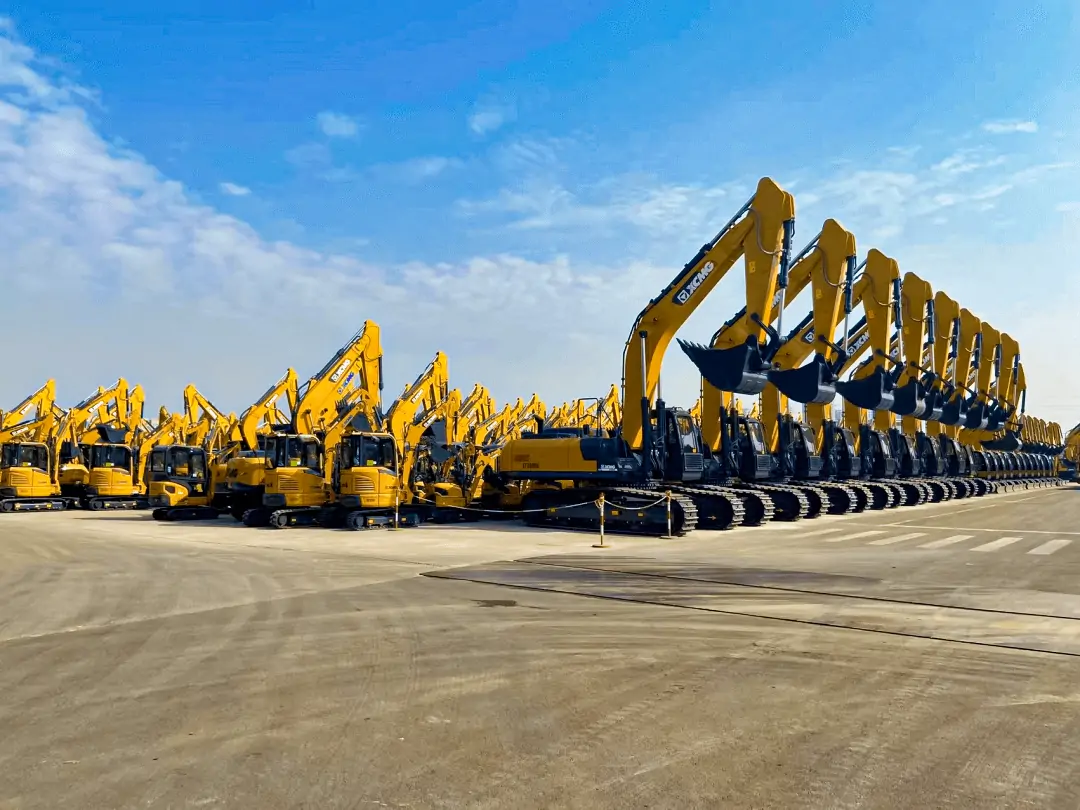
On the domestic front, China’s construction machinery industry is benefiting from a new round of large-scale equipment renewal policies implemented in December 2025, which expanded support coverage and lowered application thresholds for SMEs. With China’s construction machinery stock exceeding 9 million units and an 8-to-10-year equipment replacement cycle, 2025-2026 represents a peak period for renewal demand. The combination of policy incentives and natural replacement cycles is expected to provide a significant boost to domestic demand.
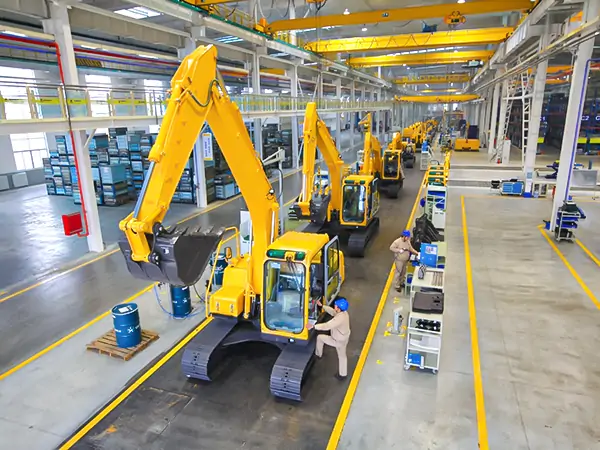
Industry research indicates that the domestic replacement cycle is gradually gaining upward momentum. Taking 2015 as the trough of the last excavator cycle and applying an 8-to-10-year replacement cycle, analysts expect 2026 to mark the beginning of an upward trajectory for domestic renewal demand, driven by agricultural and municipal infrastructure projects, continued breakthroughs in mining machinery, and water conservancy-related demand for large and ultra-large excavators.
Meanwhile, in January 2026, excavator sales reached 18,708 units, a year-on-year increase of 49.50%, and loader sales amounted to 11,759 units, growing 48.47% year-on-year,
demonstrating strong momentum entering the new year.
Despite the positive momentum, industry stakeholders face headwinds that warrant close attention. In the trade policy arena, the U.S. Supreme Court ruled in February 2026 that the International Emergency Economic Powers Act (IEEPA) does not authorize the president to impose tariffs, invalidating tariffs imposed under that statute since early 2025. However, the administration has signaled it will seek to reimpose duties under other statutory authorities, and existing Section 232 tariffs on steel and aluminum remain unaffected. In the United Kingdom, the Trade Remedies Authority upheld its decision to maintain anti-dumping duties on excavator imports from China, with rates ranging from 18.81% to 40.08%, and launched a separate anti-absorption investigation in March 2026 that could lead to further adjustments.
Nevertheless, industry analysts remain broadly optimistic. Southwest Securities projects that the primary drivers of industry growth—“replacement cycles and external demand”—remain intact, and while short-term fluctuations in domestic sales may occur due to seasonal factors, the upward trend for the year is unchanged. Guohai Securities maintains a “recommended” rating on the construction machinery sector, citing sustained strong export performance and the diversification of overseas market destinations.
The global construction equipment market is projected to reach $283.22 billion by 2031, registering a 6.64% CAGR, according to industry forecasts. Longer-term projections are even more bullish, with Global Market Insights forecasting growth from $169.6 billion in 2026 to $289.5 billion by 2035 at a 6.1% CAGR.
The construction machinery industry is navigating 2026 with remarkable strength across multiple dimensions. Surging exports from China, unprecedented technological innovation showcased at CONEXPO-CON/AGG 2026, supportive policies in key markets, and sustained global infrastructure demand are combining to create a favorable environment for industry participants. While trade policy uncertainties and geopolitical risks remain on the horizon, the fundamentals driving the industry forward—global urbanization, infrastructure modernization, the accelerating shift toward automation and electrification, and Chinese manufacturers’ expanding global footprint—point to sustained growth through 2026 and beyond. For contractors, equipment dealers, and industry stakeholders worldwide, staying attuned to these trends will be essential for navigating the opportunities and challenges that lie ahead.
 Navigating the Shift: Digitalization and Sustainability in the Global Heavy Equipment Trade